10 min read
14.09.2026
PARATUS Exploration:
From Solo Decisions to Shared Disaster Response
PARATUS Exploration: From Solo Decisions to Shared Disaster Response
Has your town or local area ever been at risk of flooding? Have you or someone close to you ever experienced it firsthand?
Now imagine it’s happening right now. What would concern you most?
Getting around could quickly become a challenge as roads and routes become impassable. Access to safe drinking water and food could be disrupted. Critical infrastructure and emergency services might struggle to keep things running.
And what about hospitals and rescue teams? Would they be able to reach those in need?
But perhaps the biggest challenge would be what happens when an entire community is suddenly cut off from the outside world – with people having to rely on one another and whatever resources they have available.
This is what makes disasters so complex. A single event can trigger a chain reaction that extends far beyond the initial hazard, disrupting multiple sectors, services, and communities in ways that are difficult to anticipate. As these effects interact and compound, a decision made in one part of the system can have unexpected consequences somewhere else.
Multi-hazard risk and decision-making under uncertainty lie at the heart of PARATUS, a Horizon Europe project exploring how different hazards and their impacts interact and cascade across interconnected systems – and how we can better prepare for them.
But how do you learn to make decisions in situations this complex? Scientific data, risk models, and reports can tell us a great deal, but seeing how these connections play out is another matter. What if you could step into a disaster scenario yourself, make a decision, and immediately see where it leads? This is where serious gaming comes in.
Meet PARATUS Exploration
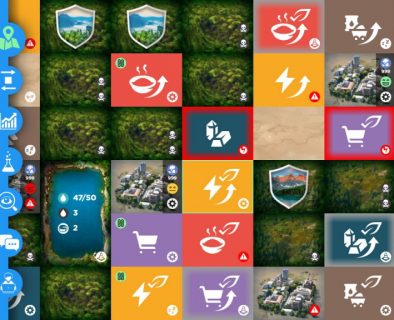
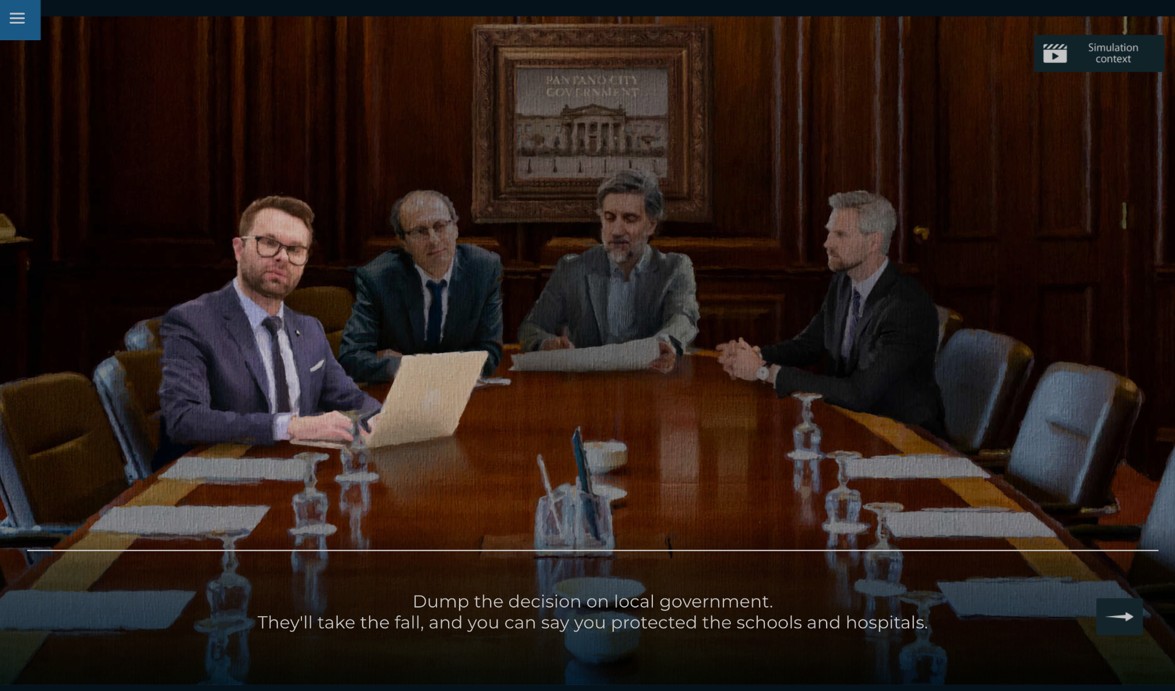
One way PARATUS helps to discover the interconnected systems is through PARATUS Exploration – a single-player, point-and-click simulation that turns scientific knowledge and complex risk scenarios into an interactive experience.
The idea is simple: instead of only reading about disaster risk, you step into a scenario and see it unfold. What is happening? Who and what is at risk? Where could you intervene? By exploring the scenario, you can spot connections that may be difficult to see in a report or dataset.
And you do not need to be a disaster risk expert to use it. PARATUS Exploration is designed to help you understand these challenges from very different perspectives. You might be an emergency responder dealing with the immediate consequences of a disaster, an urban planner thinking about how to make a city more resilient, or someone responsible for transport or critical infrastructure. You might be a policymaker faced with difficult decisions, or a stakeholder or community member taking part in a PARATUS workshop or learning lab.
Or perhaps disaster risk is something you are only beginning to explore. Educators and students can use the simulation to make topics such as compound hazards, cascading impacts, and climate adaptation easier to see, discuss, and understand.
PARATUS Exploration was co-designed by the Centre for Systems Solutions together with researchers, disaster risk practitioners, and stakeholders from different sectors, including emergency response, urban planning, transport, critical infrastructure, and public decision-making. It builds on lessons from earlier multiplayer simulations developed within the project, including High Water Pantano, Bucur Simulation, and Saltum Montem. These simulations bring people together to negotiate, collaborate, and respond to complex disaster scenarios from different perspectives, revealing the difficult choices, competing priorities, and cross-sectoral dependencies involved. They also raised an important question: what if you want to explore these dynamics before stepping into a full multiplayer simulation?
That question helped shape PARATUS Exploration and its single-player format.
Before You Decide Together, Explore Alone
Have you ever been certain that you knew the right thing to do… until you looked at the problem from someone else’s perspective?
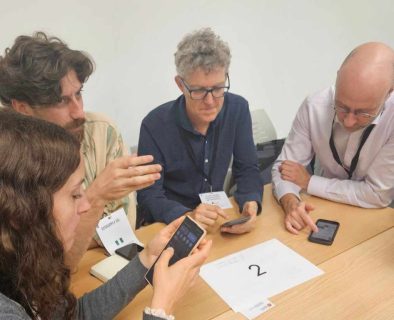
This is one of the ideas behind the single-player format of PARATUS Exploration. Before sitting down with other stakeholders to negotiate a response, you can first explore the scenario on your own: understand what is happening, try different options, and see where your decisions lead. There is no pressure to keep up with a group or defend your choices in front of others. You can pause, reconsider, and even get things wrong – because that, too, is part of learning.
More importantly, you can step into someone else’s shoes. What would you do if you were an emergency responder with limited resources and people waiting for help? What if you were an urban planner trying to protect critical infrastructure – or a municipal decision-maker forced to choose between competing priorities? A decision that seems obvious from one perspective may look very different from another.
And that matters when players eventually come together. Having already explored the scenario and experienced different perspectives, participants can spend less time learning the basics and more time tackling the questions that have no easy answers. What should come first? Who has to compromise? And what happens when protecting one part of the system puts another under pressure?
Individual exploration can therefore become preparation for something bigger: better-informed negotiation and more meaningful collaboration in multiplayer workshops.
Immersed in Risk, Grounded in Reality
A hazard map can show you where a disaster might strike. But can it show you what it feels like when one event triggers another?
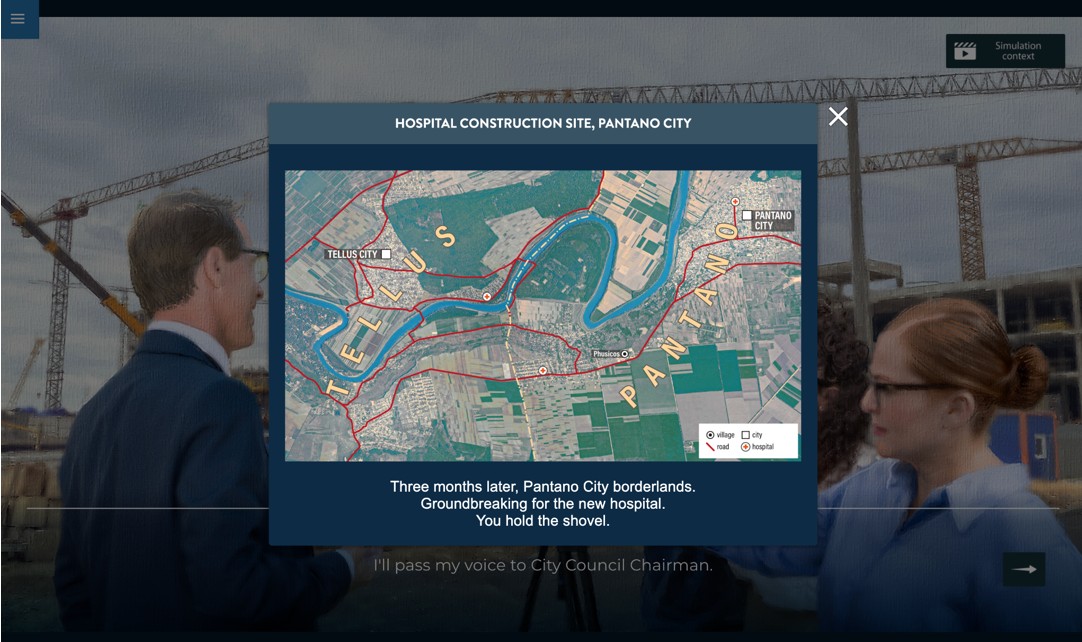
PARATUS Exploration uses visual storytelling and a changing environment to bring risk data to life. You can watch the situation develop, spot emerging problems, and follow cascading impacts as they spread across the landscape.
This approach draws on an important idea in game design: immersion is not only about what a game looks like, but also about the player’s sense of presence and agency within it. When you can interact with a scenario, make choices, and see the environment respond to them, abstract information becomes something you experience rather than simply observe – making complex risk dynamics easier to engage with, question, and remember.
But there is a challenge. How do you make a serious game engaging without turning disaster risk into just a game?
Behind the intuitive point-and-click experience lies scientific multi-hazard data, including hazard projections, impact-chain models, and spatial data. These help shape how events unfold and interact. Heavy rainfall, for example, may trigger a landslide; structural damage may disrupt infrastructure, creating consequences far beyond the initial event.
Built Around People, Designed to Adapt
Creating an experience that is both scientifically robust and easy to use does not happen by accident. PARATUS Exploration builds on the four-phase serious game design approach developed within PARATUS, grounded in the CompleCSUs framework (Kulakowska et al., 2026) and Design Thinking.
Rather than designing the game first and asking users what they thought afterwards, the PARATUS approach brings researchers, disaster risk practitioners, and stakeholders into the process from the start. Research and conceptualisation are followed by scenario and role design, prototyping and iterative testing, and finally implementation and evaluation. At each stage, feedback helps refine how real-world risk dynamics are translated into an experience that people can actually use and learn from.
Gaming experience also needs to work in very different contexts. PARATUS Exploration draws on challenges identified across several PARATUS case studies – from building safety and disrupted transport to protecting citizens and making difficult choices with limited time and resources. Its modular design means that the experience can be adapted to different regional and institutional contexts without rebuilding the game from scratch.
Language should not be a barrier either. The game includes translations for the languages used in the main PARATUS case studies, while additional languages can be added as the tool reaches new audiences. It is also designed to work across desktop and mobile devices, making it easier to bring the same experience into a workshop, classroom, office – or wherever the next discussion about disaster risk needs to happen.
Ready to Explore? Discover the PARATUS Stakeholder Hub
You have seen what serious games can bring to disaster risk learning. Now, let’s discover where you can find them and try them for yourself.
The Disaster Risk Stakeholder Hub, hosted on the Crisis Management Innovation Network Europe (CMINE) platform, brings PARATUS serious games and open-access resources together in one place. Alongside PARATUS Exploration, you can find the project’s multiplayer games and supporting materials for workshops, classrooms, and training sessions.
And you do not need to be a game designer to get started. The Hub provides digital game links, downloadable print-and-play materials, and practical facilitation resources, including role profiles, scenario maps, and debriefing materials. Whether you are planning a workshop with stakeholders or introducing students to multi-hazard risk, these resources are there to help you turn a simulation into a conversation.
Ready to give them a try? If you are an educator, first responder, disaster risk practitioner, researcher, or policymaker, check out PARATUS Exploration, visit the Disaster Risk Stakeholder Hub, and see how serious games could become part of your own teaching, training, or planning.
The next scenario is yours to explore!
References: